
A venous leg ulcer is an open, often non-healing wound near the ankle caused by long-standing venous reflux and high pressure in the leg veins. Many patients spend months on dressings without lasting healing because the underlying vein problem is never treated. At Vericure Clinic, Dr. Vishal Jindal focuses on the root cause — closing the faulty veins so the ulcer can finally heal and is far less likely to return.
Root-Cause Treatment
By closing the refluxing veins with laser, glue or MOCA, we reduce the pressure that keeps the ulcer open.
- Doppler Assessment
- Vein Closure
Complete Wound Care
Alongside treating the veins, we guide proper wound care and compression to support healing.
- Compression Therapy
- Ongoing Support
Why Choose This Treatment
Treating a venous ulcer successfully means treating its cause, not just the wound. By addressing venous reflux, healing improves dramatically and the risk of the ulcer coming back is greatly reduced.

Addresses the Cause
We treat the faulty veins driving the ulcer, not just the surface wound.

Faster Healing
Reducing venous pressure helps long-standing wounds finally heal.

Prevents Recurrence
Correcting reflux lowers the chance of the ulcer returning later.
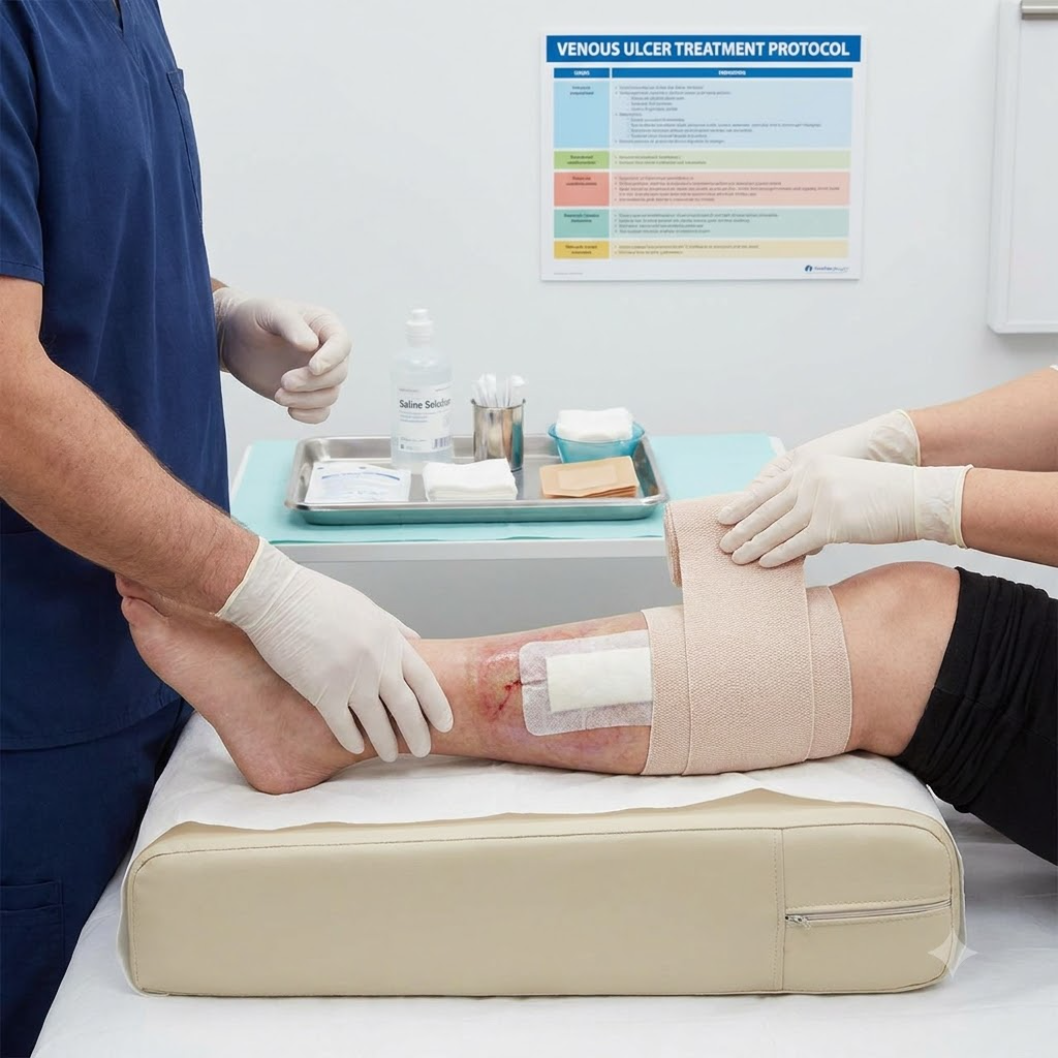
Healing wounds that wouldn't close
The purpose of venous ulcer treatment is to break the cycle of non-healing by fixing the underlying vein disease, giving patients lasting relief from painful, recurring leg ulcers.
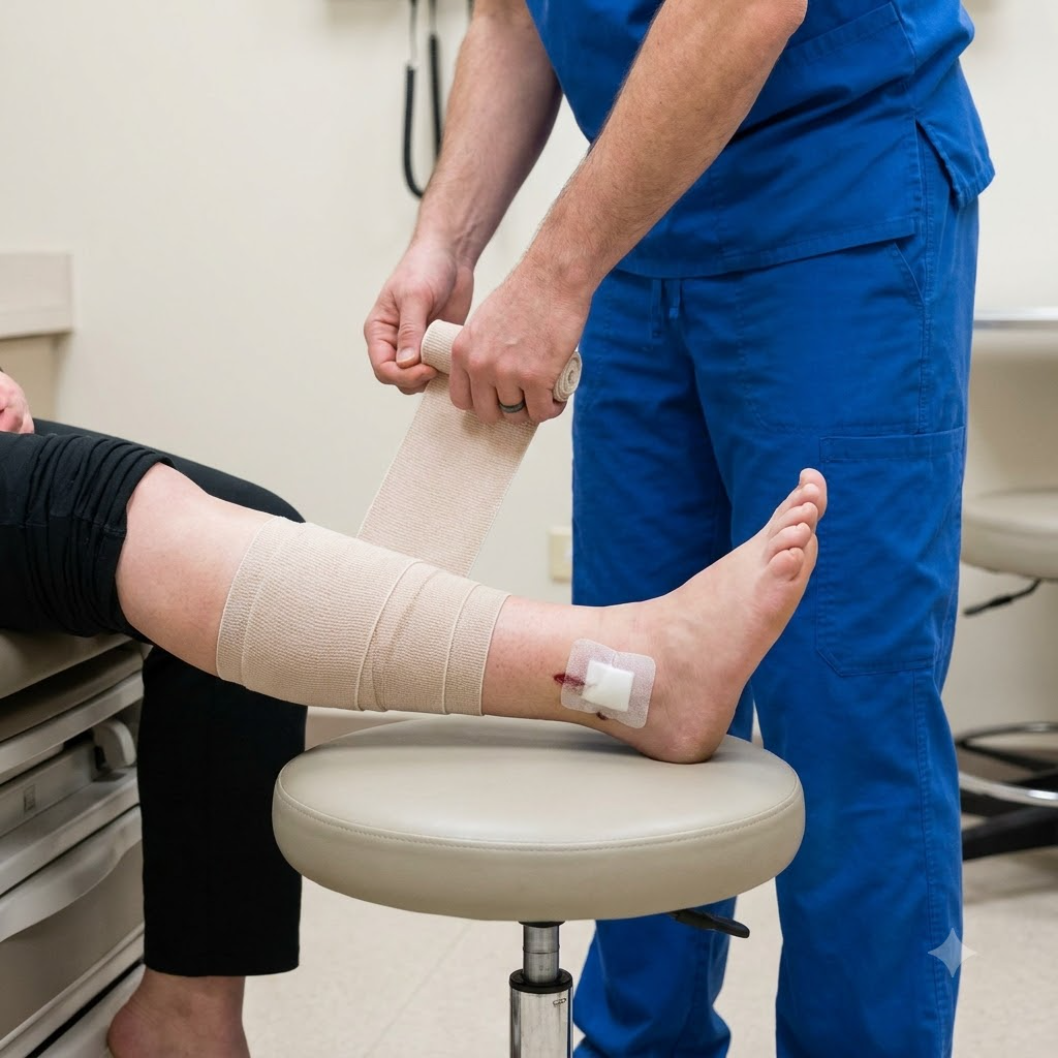
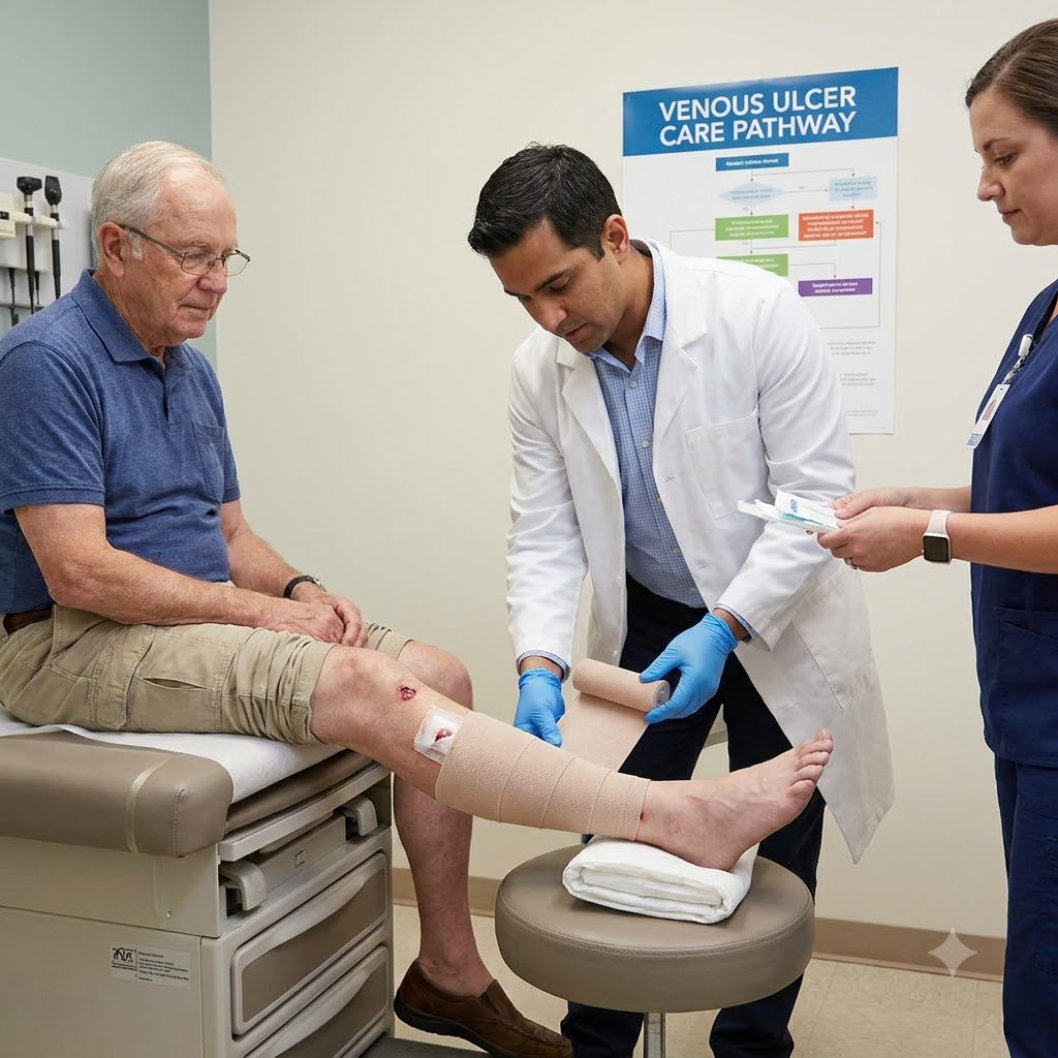
Dedicated care for every patient.
We combine minimally invasive vein treatment with proper wound and compression care, supporting you closely until the ulcer heals and beyond to prevent it returning.
- Root-cause vein treatment
- Proper compression and wound guidance
- Close follow-up until healing
- Focus on preventing recurrence
Frequently asked questions
Dressings treat the surface, but if the underlying venous reflux is not corrected the high pressure keeps the wound open.
Yes. Closing the faulty veins lowers pressure in the leg, which allows many long-standing ulcers to heal and stay healed.
The procedures are minimally invasive and done under local anaesthesia, so they are generally comfortable and well tolerated.
Healing time varies with ulcer size and duration, but many patients see clear improvement within a few weeks of treatment.
Correcting the underlying reflux greatly reduces recurrence, especially when compression and after-care advice are followed.